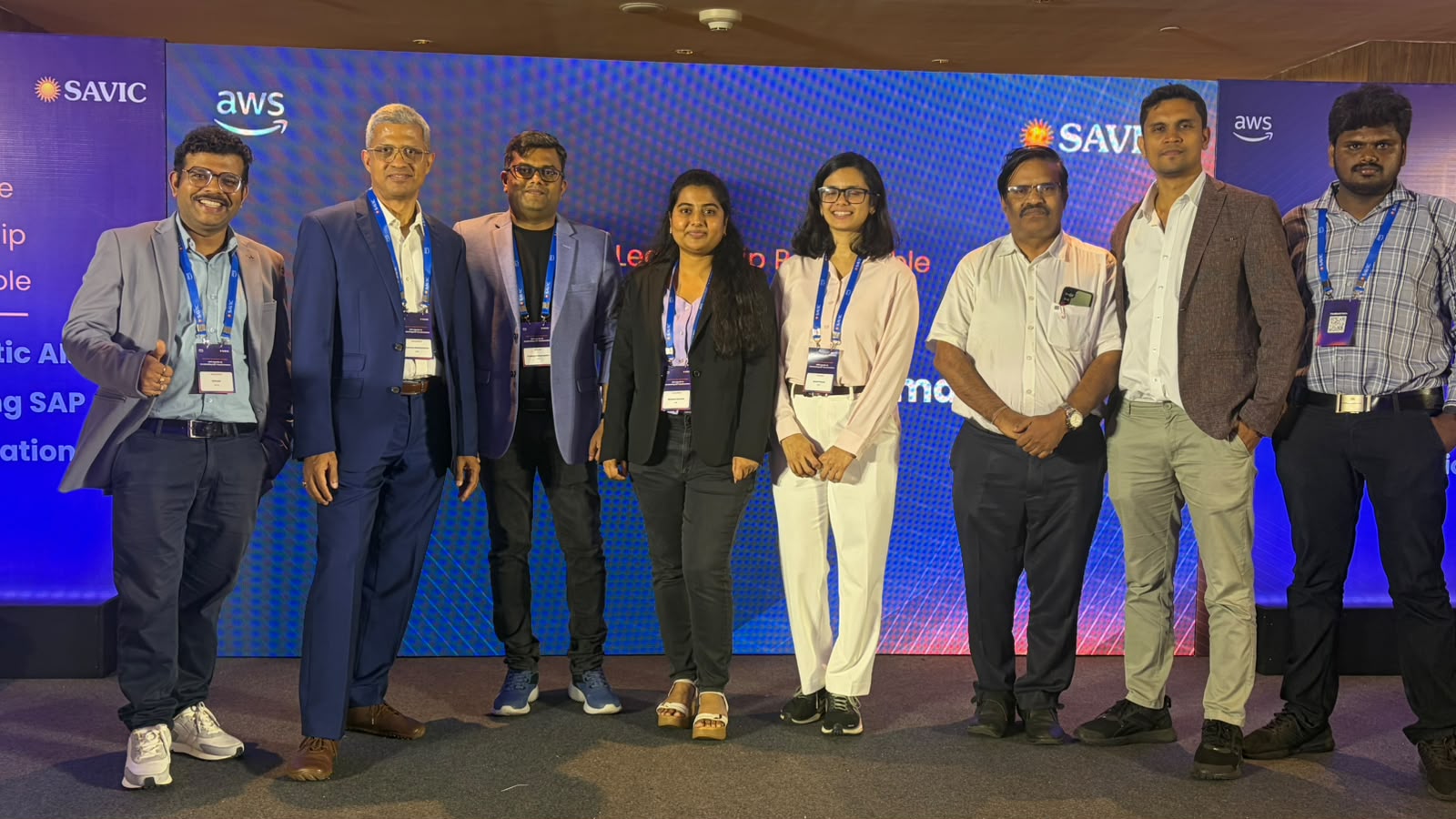
How to choose an SAP S/4HANA partner in the UAE: verify Partner Finder coverage, a UAE entity, VAT and 2027 e-invoicing experience, Arabic and GCC rollout skills.
By SAVIC SAP Practice · Nov 20, 2026 · 11 min read
How to choose an SAP partner in the UAE: the short answer
To choose an SAP S/4HANA implementation partner in the UAE, verify seven things: SAP Partner Finder coverage for the UAE, a UAE legal entity and office, hands-on UAE VAT and e-invoicing experience, Arabic and GCC rollout capability, a named senior team, references you can call, and support in Gulf time. The 2027 e-invoicing mandate makes the third check the one most likely to separate partners this year. The scorecard at the end of this guide turns the seven checks into a side-by-side comparison.
Why choosing an SAP partner in the UAE is different in 2027
Two deadlines land in the same year. SAP mainstream maintenance for SAP ECC 6.0 (enhancement packages 6 to 8) ends on 31 December 2027. And the UAE's e-invoicing mandate starts on 1 January 2027 for businesses with revenue of AED 50 million or more, and on 1 July 2027 for the rest. Companies on ECC face a choice: build e-invoicing on the old system and rebuild it after migrating, or plan the S/4HANA move and e-invoicing together.
That is why the partner decision matters more than usual. A partner that treats e-invoicing as a side task will cost you a second project. In our experience, the UAE programmes that run cleanly are the ones where compliance, data migration and the S/4HANA design are planned in one roadmap from the first workshop.
The 7 checks for an SAP S/4HANA partner in the UAE
1. UAE coverage on SAP Partner Finder
Start at SAP Partner Finder. A profile lists the countries a partner covers, its solution areas and published customer stories. Confirm the UAE is in the coverage and ask which entity will sign your contract. Be careful with badges on marketing pages: partner levels are awarded to specific legal entities, so ask which entity holds which level.
2. A UAE legal entity, and clarity on mainland or free zone
Ask for the UAE entity name, its licence type and the office address. Many SAP firms are licensed in a free zone, others on the mainland. Either can work, but your finance and legal teams should check how the contract will be invoiced, how VAT applies, and whether the partner can work on site at your premises across the Emirates. Remote delivery is normal for build and testing. Workshops, training and cutover go better with people in the room.
3. UAE VAT and e-invoicing experience you can see
This is the check most shortlists skip. Ask the partner to walk you through how it configured UAE VAT (5%) and tax reporting for another UAE client, and how it is preparing clients for the e-invoicing mandate. Good answers cover the Peppol-based model, the role of your Accredited Service Provider, and which SAP component handles the documents, usually SAP Document and Reporting Compliance (DRC). If the answer is "we will look into it during the project", treat it as a red flag.
4. Arabic, multi-currency and GCC rollouts
Many UAE groups also trade in Saudi Arabia, Oman, Qatar or beyond. Ask how the partner handles Arabic print forms and user interfaces, multi-currency consolidation, and country rollouts. If you operate in Saudi Arabia, ask specifically about ZATCA e-invoicing (FATOORA), which has different rules from the UAE model. One template rolled out country by country beats separate projects per country.
5. A named, senior delivery team
Ask who will run your project: the project manager, the solution architect and the lead functional consultants for finance, supply chain and HR. Check their SAP certifications and their tenure with the partner. The people in the pitch should be the people on the project.
6. References you can call
Ask for two or three customers you can speak to, ideally in the UAE or GCC, in your industry and of a similar size. A reference call answers questions a case study never will: how the partner behaved when scope changed, and who picked up the phone after go-live.
7. Support after go-live, in Gulf time
Check the hypercare period, the support contract (response and resolution times by priority), the hours covered in Gulf Standard Time, weekend and public-holiday cover, and who handles SAP Basis and security. See how SAP managed services work.
UAE compliance dates your SAP partner should plan around
| Date | What happens | What it means for your SAP project |
|---|---|---|
| 1 January 2027 | E-invoicing mandatory for businesses with revenue of AED 50 million or more | E-invoicing must already run in your current ERP, or go live with the new one |
| 31 March 2027 | Businesses below AED 50 million must appoint an Accredited Service Provider | Your partner should help you choose and connect the provider |
| 1 July 2027 | E-invoicing mandatory for businesses below AED 50 million | Plan testing with your provider at least one quarter ahead |
| 31 December 2027 | SAP mainstream maintenance ends for ECC 6.0 (EHP 6 to 8) | Decide your S/4HANA path so e-invoicing is not built twice |
Sources: UAE Ministry of Finance (Ministerial Decisions No. 244 of 2025 and No. 66 of 2026) and SAP release and maintenance strategy. Confirm the dates that apply to you with the Ministry of Finance and the FTA. For the ECC side, read our guide to ECC end of maintenance in 2027.
SAP partner selection scorecard for UAE companies
Send the same questions to every partner on your shortlist and score each answer from 0 (no answer) to 3 (clear answer with evidence). The weights reflect what goes wrong most often on UAE projects.
| Check | Question to send | Weight |
|---|---|---|
| Partner Finder | Which entity covers the UAE on SAP Partner Finder? Please share the link. | ×2 |
| UAE entity | Which UAE entity signs the contract, and where is your office? | ×2 |
| VAT and e-invoicing | Show us how you set up VAT and e-invoicing for another UAE client. | ×3 |
| GCC rollouts | How would you roll out to our entities outside the UAE? | ×1 |
| Team | Who exactly will be on our project? Please share CVs. | ×2 |
| References | Can we speak to two UAE or GCC customers? | ×2 |
| Support | What are your response times and hours in Gulf time? | ×1 |
A partner that scores well on everything except e-invoicing is a risk in 2027. A partner that scores well on e-invoicing but cannot name its team is a different risk. The scorecard makes both visible before you sign.
Global integrator or specialist SAP partner in the UAE?
Both can work. Global system integrators bring scale for very large, multi-system transformations. Specialist SAP partners focus only on SAP, usually put more senior consultants on each project, and move faster on mid-market and focused scopes. Which edition you need matters too: SAP GROW for companies that can adopt standard processes, RISE with SAP for groups with complex or heavily customised processes. Score both types of partner against the same seven checks.
Worked example: how SAVIC answers the seven checks
To show what evidence looks like, here is how SAVIC answers the same checklist:
- Partner Finder: SAVIC is listed for the UAE on SAP Partner Finder. In the UAE, SAVIC L.L.C-FZ is an SAP implementation partner; SAVIC Technologies is an SAP Platinum Partner in India.
- UAE presence: two Dubai offices: Office 405, Dubai National Insurance Building, Port Saeed, Deira, and The Meydan Grandstand, 6th Floor, Nad Al Sheba.
- E-invoicing: SAVIC is implementing SAP Document and Reporting Compliance for Leader Healthcare Group in the UAE, a project that started in August 2026.
- Editions: SAP GROW and RISE with SAP, with 125+ S/4HANA Cloud projects delivered globally.
- Scale: 488+ customers in 15+ countries, with delivery teams in the UAE, India, Singapore, Malaysia, the UK and the USA.
- HR: 50+ SAP SuccessFactors implementations across India and the Middle East.
- Support: 24/7 MAXCare SAP managed services after go-live.
That is the base we write from. Not press releases. For a broader framework that is not specific to the UAE, read our guide to evaluating SAP consulting companies, or compare with our Singapore partner checklist if you run entities in both markets.
What to do next
- Confirm your e-invoicing date from your revenue band and write it at the top of your project plan.
- Decide whether ECC stays until after go-live of e-invoicing or whether both move together.
- Shortlist three partners and check each on SAP Partner Finder.
- Send every partner the seven scorecard questions above, in writing.
- Hold reference calls before the final presentations, not after.
- Talk to SAVIC's Dubai team about your e-invoicing date and S/4HANA path.
Why SAVIC in the UAE
SAVIC is a pure-play SAP partner: SAP is all we do. UAE clients work with a team based in two Dubai offices, backed by delivery centres in India, Singapore and Malaysia. We plan S/4HANA, ECC migration and e-invoicing as one roadmap, because in 2027 they are one problem. Across 488+ customers in 15+ countries, the lesson is consistent: the projects that go well are the ones where local compliance is designed in, not added at the end.
Frequently asked questions
How do I choose an SAP partner in the UAE?
Check that the partner is listed for the UAE on SAP Partner Finder, has a UAE legal entity and office, has already configured UAE VAT and is ready for the 2027 e-invoicing mandate, can deliver Arabic and multi-country GCC rollouts, names its delivery team, gives you callable references, and offers support in Gulf time. Score every shortlisted partner against the same checklist so you compare like with like.
How can I verify that a company is an official SAP partner in the UAE?
Search for the company on SAP Partner Finder (sap.com/partners). The profile shows the countries the partner covers and its solution areas. Confirm the UAE is in the coverage and ask which legal entity will sign your contract. If a firm is not on Partner Finder, or the UAE is missing from its coverage, ask why before you go further.
When is e-invoicing mandatory in the UAE?
Under Ministerial Decision No. 244 of 2025, as amended by Ministerial Decision No. 66 of 2026, businesses with annual revenue of AED 50 million or more must issue e-invoices from 1 January 2027, and businesses below that threshold from 1 July 2027. Government entities follow from 1 October 2027. The model is based on Peppol and covers B2B and B2G transactions. Always confirm current dates with the Ministry of Finance and the FTA.
Does my SAP partner need an office in the UAE?
For most projects, yes. Build and testing can run remotely, but fit-to-standard workshops, user training, cutover and go-live support work better with people on site. A UAE entity also means local contracts and VAT invoicing, and a team that works in Gulf Standard Time.
Should a UAE company choose SAP GROW or RISE with SAP?
SAP GROW (SAP Cloud ERP, public edition) suits growing and mid-market companies that can adopt SAP best practices with little customisation. RISE with SAP (SAP Cloud ERP Private) suits larger groups with complex processes, heavy customisation or several GCC entities. A good partner can deliver both and recommends one based on your processes, not on what it sells.
How long does an SAP S/4HANA implementation take in the UAE?
A focused SAP GROW project for a mid-market company can go live in about 3 to 6 months. RISE with SAP programmes and ECC conversions usually take 6 to 18 months, depending on scope, the number of entities and countries, and data migration. If your e-invoicing date falls inside the project, plan it as its own workstream from day one.
Which SAP partners operate in the UAE?
Many SAP partners serve the UAE, from global system integrators to specialist SAP firms. SAVIC L.L.C-FZ is an SAP implementation partner in the UAE with offices in Deira and Meydan, Dubai, delivering SAP S/4HANA, SAP GROW and RISE with SAP, ECC migration, SAP Document and Reporting Compliance for e-invoicing, and SAP managed services. Use the scorecard in this guide to compare any partner you shortlist.
Last reviewed: 20 November 2026 by SAVIC SAP Practice
Frequently Asked Questions
How do I choose an SAP partner in the UAE?
Check that the partner is listed for the UAE on SAP Partner Finder, has a UAE legal entity and office, has already configured UAE VAT and is ready for the 2027 e-invoicing mandate, can deliver Arabic and multi-country GCC rollouts, names its delivery team, gives you callable references, and offers support in Gulf time. Score every shortlisted partner against the same checklist so you compare like with like.
How can I verify that a company is an official SAP partner in the UAE?
Search for the company on SAP Partner Finder (sap.com/partners). The profile shows the countries the partner covers and its solution areas. Confirm the UAE is in the coverage and ask which legal entity will sign your contract. If a firm is not on Partner Finder, or the UAE is missing from its coverage, ask why before you go further.
When is e-invoicing mandatory in the UAE?
Under Ministerial Decision No. 244 of 2025, as amended by Ministerial Decision No. 66 of 2026, businesses with annual revenue of AED 50 million or more must issue e-invoices from 1 January 2027, and businesses below that threshold from 1 July 2027. Government entities follow from 1 October 2027. The model is based on Peppol and covers B2B and B2G transactions. Always confirm current dates with the Ministry of Finance and the FTA.
Does my SAP partner need an office in the UAE?
For most projects, yes. Build and testing can run remotely, but fit-to-standard workshops, user training, cutover and go-live support work better with people on site. A UAE entity also means local contracts and VAT invoicing, and a team that works in Gulf Standard Time.
Should a UAE company choose SAP GROW or RISE with SAP?
SAP GROW (SAP Cloud ERP, public edition) suits growing and mid-market companies that can adopt SAP best practices with little customisation. RISE with SAP (SAP Cloud ERP Private) suits larger groups with complex processes, heavy customisation or several GCC entities. A good partner can deliver both and recommends one based on your processes, not on what it sells.
How long does an SAP S/4HANA implementation take in the UAE?
A focused SAP GROW project for a mid-market company can go live in about 3 to 6 months. RISE with SAP programmes and ECC conversions usually take 6 to 18 months, depending on scope, the number of entities and countries, and data migration. If your e-invoicing date falls inside the project, plan it as its own workstream from day one.
Which SAP partners operate in the UAE?
Many SAP partners serve the UAE, from global system integrators to specialist SAP firms. SAVIC L.L.C-FZ is an SAP implementation partner in the UAE with offices in Deira and Meydan, Dubai, delivering SAP S/4HANA, SAP GROW and RISE with SAP, ECC migration, SAP Document and Reporting Compliance for e-invoicing, and SAP managed services. Use the scorecard in this guide to compare any partner you shortlist.